

How China is plugging energy supply gaps left by U.S.-Iran conflict
The world's largest energy product importer and consumer is switching up its supplier mix in response to the upheaval in oil, gas and fuel flows from the Middle East since the U.S. and Israel war with Iran kicked off over a month ago.
China secured roughly half of its total imports of crude oil, refined fuels, liquefied natural gas (LNG) and liquefied petroleum gas (LPG) from the Middle East in 2025, data from commodities intelligence firm Kpler shows.
However, the outbreak of U.S. and Israel war against Iran has choked off tanker shipping from the Middle East to other regions, forcing China and other major energy importers to seek alternate sources of energy products.
Here's a breakdown of China's historic reliance on the Middle East for major energy product supplies, and which nations are stepping up shipments to China since the war with Iran has virtually stopped shipping traffic through the Strait of Hormuz.
CRUDE OIL and REFINED PRODUCTS. China imported roughly 642 million metric tons of crude oil, refined fuels, LNG and LPG in 2025, with 317 million tons or 49.4% coming from suppliers based in the Middle East, Kpler data shows.
No other region comes even close to the Middle East's share of China's import needs of those energy products, with South America ranking second with a 12% share and East Asia and West Africa both boasting a roughly 8.5% share.
In terms of crude oil, the Middle East supplied around 52% of China's total oil imports in 2025, or around 1.9 billion of the nearly 3.6 billion barrels of crude the country imported.
Due to the cuts to outbound oil shipments from the Middle East since the war began at the end of February, the Middle East's share of China's total oil imports has plunged, falling to a multi-year low of only 31% in May.
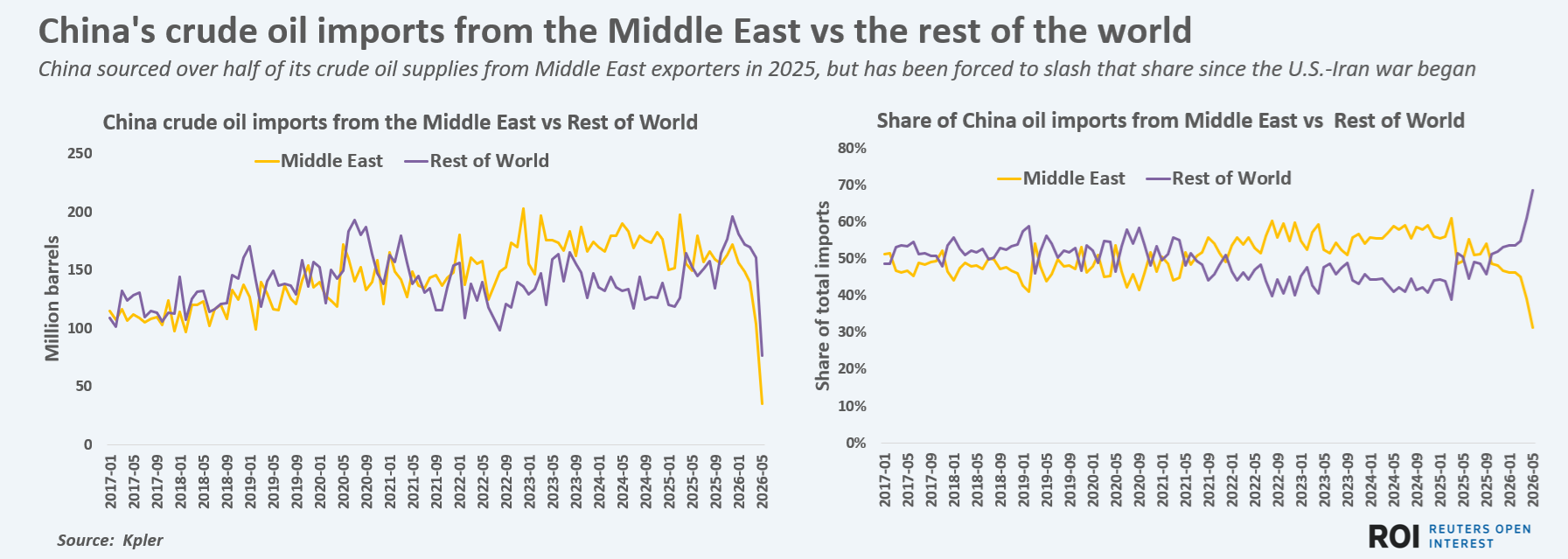
Total crude oil exports from the Middle East to China were 581 million barrels from January to May, which marked a 28% fall from the same months in 2025.
To make up for the shortfall from the likes of Iran and Saudi Arabia, China has stepped up imports from South America and Eastern Europe, with Brazil and Russia both registering strong year-over-year volumes to China so far in 2026.
That said, total crude oil imports by China through the first five months of 2026 are down roughly 10% from the same months in 2025, indicating China's enduring difficulties in replacing Middle Eastern supplies.
On the fuels front, China's combined imports of gasoline, naphtha, gasoil/diesel and jet fuel/kerosene are down by around 11% during January to May compared to that period in 2025, to around 51 million barrels.
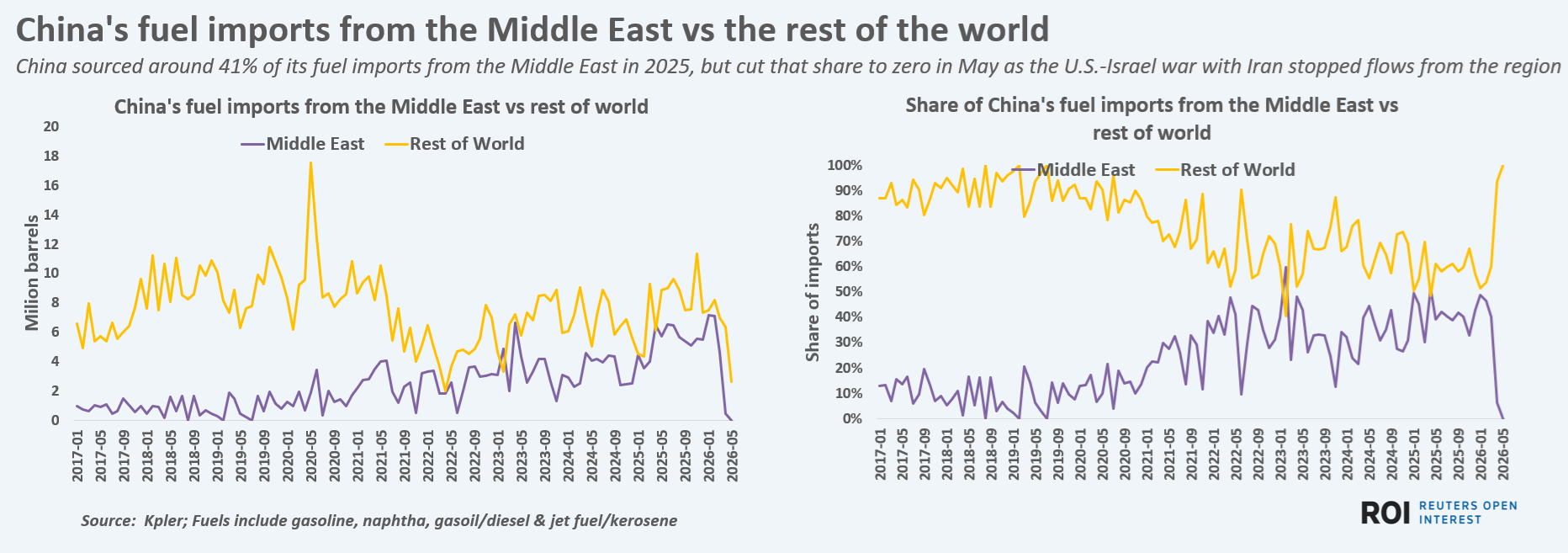
Middle Eastern suppliers accounted for around 41% of China's total refined product imports in 2025, but supplied less than 1% in May, according to Kpler, following the closure of shipping lanes.
From January to May, China's fuel imports from the Middle East are down by 20% to around 19.2 million barrels, while imports from all other regions are down by around 4% on the year to around 31.6 million barrels.
The only major region to register a strong increase in fuel flows to China was North Africa, with Algeria and Egypt both recording steep year-over-year rises in fuel exports to China so far in 2026.
LNG and LPG. China imported around 40% of its LNG and LPG supplies from Middle Eastern nations in 2025, so the closure of the outbound traffic from the region has also impacted China's gas markets.
From January through May, total China LNG and LPG imports from the Middle East dropped by 43% to just under 9 million metric tons from over 15 million tons during the same months last year.
Total gas shipments from all other regions have also shrunk so far this year, but by only 12%, revealing that Middle East volumes have fallen much more sharply than those from other suppliers.
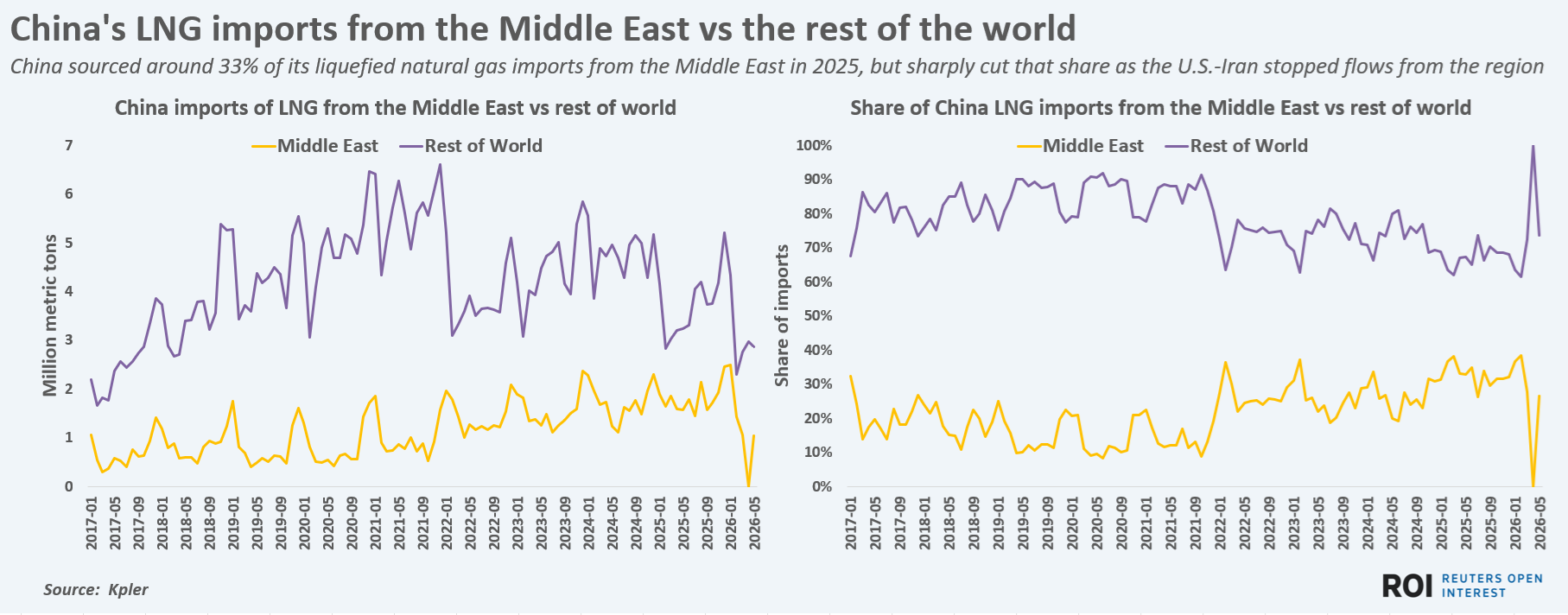
In LNG, total exports from the Middle East to China during January to May are estimated around 6 million tons, which is around 2.5 million tons or around 30% less than during the same months in 2025.
Other major LNG exporting regions - including Australasia - have also posted year-over-year contractions in LNG sales to China, due mainly to enduring weakness across key industrial sectors in China so far in 2026.
Even so, China's total LNG imports have posted only a 15% decline so far this year, meaning that imports from the Middle East have fallen by twice as much as China's total LNG imports.
China's total imports of LPG - used mainly by petrochemical plants and in rural areas for heating and cooking - have dropped by around 25% so far in 2026 compared to a year ago.
However, supplies from the Middle East have declined by only 16% versus January to May in 2025, meaning that the LPG sector is one of the few energy sectors where the war with Iran has yet to materially impact China's imports from the Middle East.
That said, the enduring weak patch for the country's chemicals sector means that overall demand for LPG remains muted compared to a year ago, while demand for heating in households will have peaked early in the year at the height of winter.
China's LPG import volumes may become more severely impacted by the Middle East conflict if shipments from the region remain constrained for several more months and affect restocking trends ahead of next winter.
The opinions expressed here are those of Gavin Maguire, a columnist for Reuters.
Related News
Related News

- U.S. natgas prices hit 20-week high on LNG flows, heat outlook
- Baker Hughes’ fuel flexible NovaLT™ 16 gas turbine certified by RINA for marine propulsion
- Commonwealth LNG FID attracts global syndicate of leading banks
- Dozens injured, 18 missing after blast during restart at giant Qatar LNG site
- U.S. natgas futures rise as hotter weather boosts demand, some spot prices negative

Comments