

DNV GL collaboration to develop pipeline coating design guidelines
With subsea pipelines increasing in diameter and extending into deeper waters and more challenging environments, design requirements for concrete weight coating often do not meet current needs. This results in inconsistent safety margins and potentially expensive overdesign and stringent installation requirements.
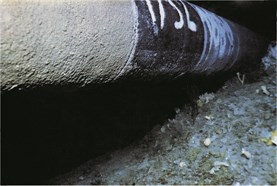 DNV GL has begun the first phase of a joint industry project (JIP) to address these issues and improve the understanding of pipeline concrete behavior. The JIP will lead to a rational design approach based on a quantitative understanding of concrete-coating behavior in response to external loads and the interaction between the important mechanisms and factors that influence this behavior.
The first phase of the JIP will develop a design approach for pipeline concrete coating and is due for completion by December 2015. The second phase is for an experimental validation of the design approach and development of a design guideline for pipeline concrete coating.
The JIP, which is relevant for pipeline operators, designers, installation contractors and coating contractors and is still open for participants, is expected to be completed by the end of 2016.
Concrete weight coating is widely used to protect submarine pipelines and ensure stability on the seabed. The current design approach is primarily based on simple and general design requirements. The method has proven reasonably reliable for most traditional pipelines but does not capture all potential failure modes.
“Many industry players have sought a more thorough understanding of the behavior of pipeline concrete weight coating during the installation and operational phases,” said Nguyen Thi Bich Ngoc, JIP project manager.
“They expect more specific acceptance criteria, a less conservative approach to the strain in the concrete coating subject to bending and a more accurate estimate of the strain concentration factor at the field joints," he added.
Current participants include Petrobras, Saipem, Bredero Shaw, SVAP and Wasco Coatings.
Preliminary DNV GL studies suggest that in-depth knowledge about the contribution of and interaction among several factors is needed to understand pipeline concrete coating behavior: the shear transfer capacity, coating thickness, strength, fabrication method, type, location, spacing, percentage steel reinforcement and loads, among others. These factors must be validated against recent test results and combined with knowledge gained from industry experience before being incorporated into pipeline codes and standards.

- Cheniere signs deal with Bechtel to expand U.S. LNG export capacity
- TC Energy approves $1.5-B Columbia Gas expansion after profit tops estimates
- Baker Hughes’ fuel flexible NovaLT™ 16 gas turbine certified by RINA for marine propulsion
- Commonwealth LNG FID attracts global syndicate of leading banks
- Dozens injured, 18 missing after blast during restart at giant Qatar LNG site

Comments