

Clean Energy breaks ground on three RNG dairy projects with Maas Energy Works
Clean Energy Fuels Corp. has broken ground on three renewable natural gas (RNG) production facilities under its development agreement with Maas Energy Works. These projects span six U.S. dairies located in South Dakota, Georgia, Florida and New Mexico, and are expected to produce approximately 3 MM gallons (gal) of RNG annually once fully operational.
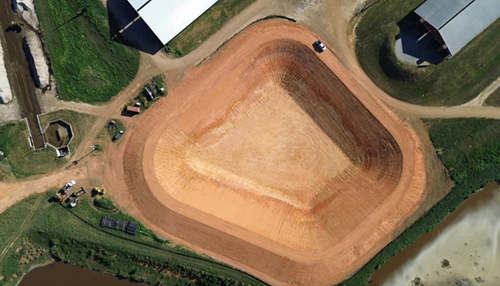
Clean Energy x Maas Energy Works Southbrook, Georgia site under construction.
Capturing methane from a combined herd of 24,300 dairy cows, preventing harmful emissions from entering the atmosphere, the RNG produced will be used to power heavy-duty trucking, transit and vocational fleets nationwide – providing a reliable supply of negative-carbon fuel to Clean Energy’s network of > 600 stations.
“Partnering with an industry leader like Maas Energy Works on these projects will enable us to quickly bring meaningful volumes of ultraclean fuel to the transportation market,” said Clay Corbus, senior vice president of renewables at Clean Energy. “We’re seeing rising demand for RNG from fleets looking to decarbonize, and breaking ground on these production facilities is a significant step forward in meeting that need.”
Maas Energy Works brings a unique approach to RNG production through its covered lagoon system. Unlike traditional anaerobic digester tanks which are more costly to build and operate, Maas Energy’s method involves capturing methane from manure stored in large, tarp-covered lagoon digesters. This technique offers a cost-effective and efficient alternative for manure collection and RNG production.
Clean Energy has elected to move forward with three RNG projects with Maas Energy Works after finalizing diligence. All demonstrating strong economic viability, the projects are forecasted to cost $80 MM and are on track for completion in 2026.
Clean Energy still has the rights to develop the other remaining projects at a later date as market conditions and project economics evolve.
Agriculture accounts for nearly 10% of U.S. greenhouse gas (GHG) emissions and the transportation sector accounts for another 28%, according to the U.S. Environmental Protection Agency. Capturing methane from farm waste lowers these emissions. RNG, produced by that captured methane and used as a transportation fuel, significantly lowers GHG emissions on a lifecycle basis when compared to diesel. This allows RNG to be one of the only fuels to receive a negative carbon-intensity score based on the reduction of emissions at the source and at the vehicle.
About Clean Energy
Related News
Related News
- Mitsubishi Heavy Industries Compressor acquires Swiss rotating equipment maintenance company AST Turbo AG
- RWE strengthens partnerships with ADNOC and Masdar to enhance energy security in Germany and Europe
- TotalEnergies and Mozambique announce the full restart of the $20-B Mozambique LNG project
- Venture Global wins LNG arbitration case brought by Spain's Repsol
- KBR awarded FEED for Coastal Bend LNG project

Comments